
Although it often pops up on lists of ‘secret villages’, it’s probably not apt to call Heydon a secret. Practically everybody knows about it. It has long been used as a backdrop for films and BBC dramas in want of picture-perfect English domesticity. The village was even the setting for a wonderfully iffy 1960s soap opera by the name of Weavers Green. How many secret villages can you think of that have provided the backdrop for a soap opera?
The notion of Heydon’s ‘secrecy’ can be further challenged by how often its village green plays host to vintage craft fairs, bonfires, and other such events that attract great numbers of well-dressed artisans and elderly gents in loose cottons (who seem to always stroll around with their hands held behind their backs – at what age does one begin to adopt this pose?).
Despite all this, Heydon does retain a furtive aspect. Everybody knows about Heydon, and everybody knows that it’s lovely. But, go there on a random afternoon, and you’ll find it as hallowed and unpeopled as a lone medieval church.
Like practically everywhere in Norfolk, Heydon does have a medieval church. And it is suitably hallowed and unpeopled. In fact, Heydon has most of the things you would expect to see in a modern rural settlement, including a gastro-pub (fairy lights, wood burner, dogs welcome) and a tearoom (fairy lights, scones, dogs welcome – on leads).

Two things serve to make Heydon unique, however. The first is that it has no through-road. To exit the village, you have to turn around and go back the way you entered. Its lack of passing traffic gives the place a solitude unrivalled by similarly picturesque UK hotspots like Turville in Bucks, or Lavenham, Suffolk, which are both clogged with parked cars on any given day. Better still, the village has recently had a car park installed, meaning there is no reason for automobiles to sully Heydon’s scenery at all.
Heydon’s second distinctive feature is that every building is from a century past. There are practically no new builds, bar a couple of delicately revamped retail properties (fairy lights, rusty watering cans, dried lavender). The last truly new addition to the village – perhaps hamlet is a better word – was the little red-bricked Queen Victoria Memorial Well on the green, built in 1887.
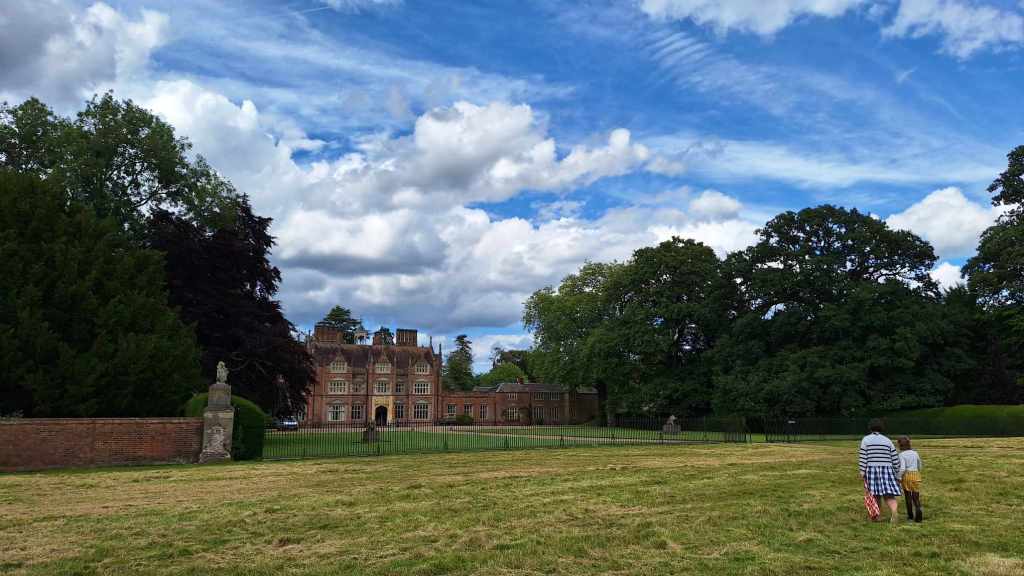
Heydon is a watercolour painting of an imaginary England, except that it’s all real: the bright red postbox, the bunting-drenched tearoom, the leafy churchyard, the row of alms houses, the rosebushes, the sound of a Radio 4 play drifting faintly through open upper windows. The whole village has been owned by one Norfolk family since the 1750s, effectively making it Grand Designs-proof. Long may the arrangement continue.

Heydon is one of those rare places that looks inviting in all weathers. Its cottages and sloping roofs are as pretty when washed in rain as when bathed in sunshine. In fog and snow, the place is almost heartbreakingly cosy. It makes you want to tap on one of the cottage’s little window slats and say, ‘Excuse me. Do you mind if I live here with you from now on?’
The village has long appealed to cinematographers hoping to lend their productions an authentic taste of yesteryear. Of all its on-screen appearances, Heydon and its surrounding sweeps of farmland are best captured in Joseph Losey’s 1971 adaptation of The Go-Between. Unlike the book, the film is a bit of a slog and features the worst attempt at a Norfolk accent ever committed to film (arise, Sir Alan Bates). But the scenery is sumptuous.
For me, however, the on-screen moment which best sums up the spirit of Heydon is from a 1985 BBC adaptation of Dickens’ Pickwick Papers. In it, the village green plays host to a gentle game of cricket. Watching the programme back now, you’ll see that not a bit of Heydon has changed in almost forty years. I suspect the same would be true for a real Victorian, should they see Heydon today.
The world marches on into riots and chaos, but Heydon turns its back on them all. No wonder everyone is trying to keep it secret.
 The Norfolk Writer